
This document provides an in-depth look at how the interaction between circadian rhythms and meal timing affects metabolic health. It explains the biological mechanisms through which poor meal timing increases the risk of metabolic diseases like obesity and diabetes, and proposes strategies such as Time-Restricted Eating (TRE) to address them. It also analyzes the various factors influencing meal timing—from genetics to social environment—and emphasizes the need for personalized precision nutrition.
1. The Close Relationship Between the Body Clock and Metabolism
Our bodies have a built-in circadian clock that regulates physiological processes and behavior in alignment with Earth's 24-hour rotation cycle. This system plays a crucial role in determining the optimal times to consume, utilize, and excrete nutrients. However, the always-on lifestyle of modern society easily disrupts these circadian rhythms, which is a major contributor to the increased risk of metabolic diseases like obesity and type 2 diabetes.
Interestingly, food intake is one of the most powerful signals for synchronizing the body clock, alongside light. This means that not only what and how much you eat matters, but when you eat has a decisive impact on metabolic health.
The Harmony of Central and Peripheral Clocks
In the hypothalamus of our brain, there is a light-responsive Master Clock called the suprachiasmatic nucleus (SCN). Additionally, organs like the liver, gut, and adipose tissue each have their own peripheral clocks.
- Master Clock: Receives light signals and regulates day-night behavior.
- Peripheral Clocks: Primarily operate based on food intake signals.
In a healthy state, these two clocks work harmoniously. But when you eat late-night snacks or have irregular meal times, the peripheral clocks become desynchronized from the master clock, causing confusion in the metabolic system.
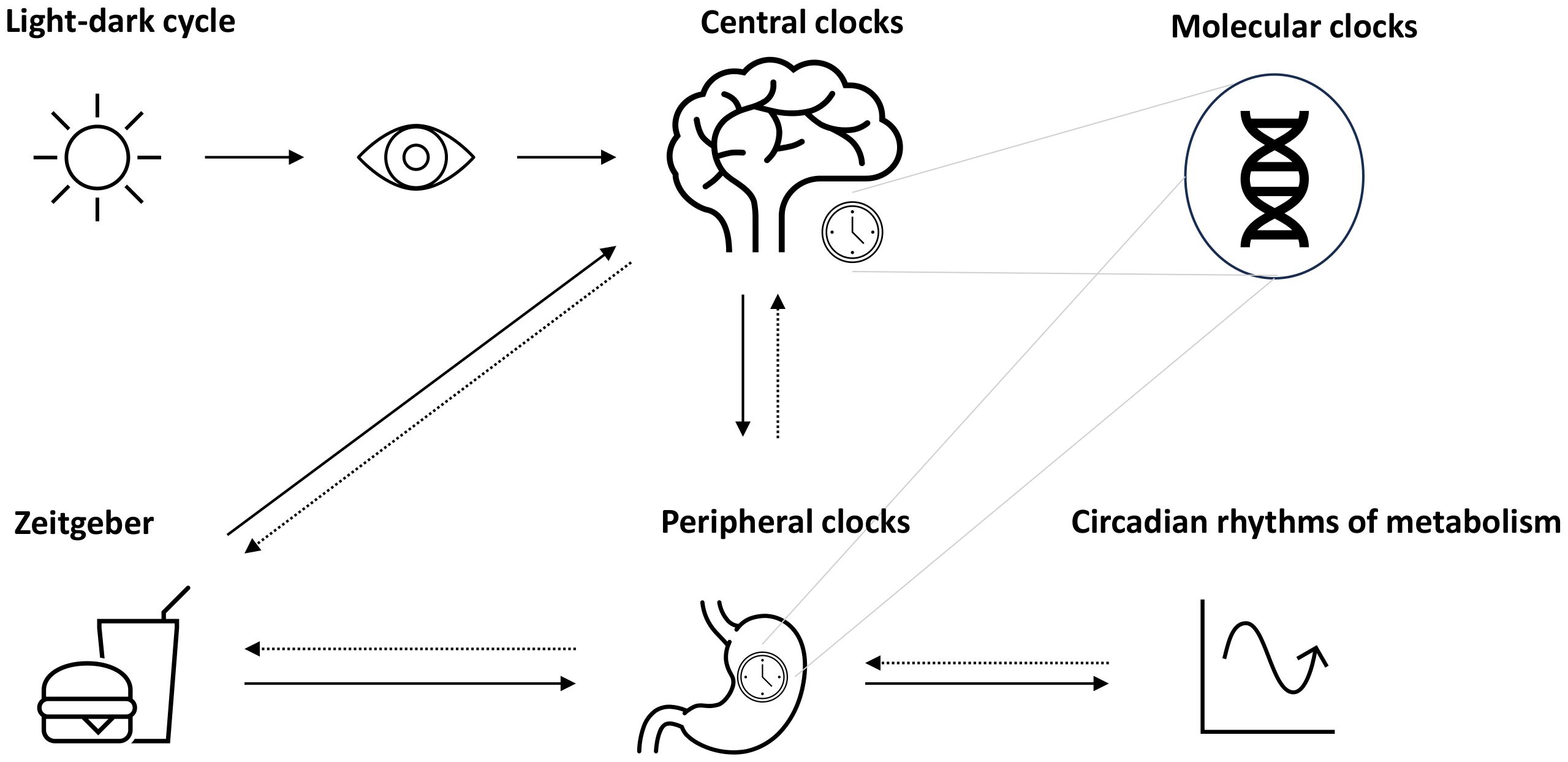
Figure 1: Light regulates the brain's master clock (SCN), while food intake regulates the peripheral clocks of organs. These two must be in harmony to maintain healthy metabolic rhythms.
2. What Happens When Meal Timing Is Misaligned
Both animal experiments and human studies have revealed that misalignment between meal timing and circadian rhythms negatively affects health.
Findings from Mouse Experiments
Mice with disrupted circadian clock genes showed symptoms of overeating, obesity, fatty liver, and hyperglycemia. Particularly interesting was the finding that when mice were fed during their rest period (daytime) rather than their active period (nighttime), they gained more weight even on the same number of calories. Conversely, time-restricted feeding could partially prevent obesity even on a high-fat diet.
Effects in Humans
The situation is similar in humans, especially shift workers. Reversed day-night schedules increase the risk of obesity and cardiovascular disease. Research has shown that late-night eating habits are closely associated with weight gain.
Late eating, particularly consuming most of the day's calories after 8 PM ('night eating'), is associated with higher BMI regardless of sleep habits.
When meal timing is off, our bodies may respond as follows:
- Weight gain and obesity: The later you eat, the easier it is to gain weight.
- Impaired glucose tolerance: Eating lunch late or overeating at dinner reduces blood sugar regulation.
- Reduced diet effectiveness: Even during weight loss efforts, people who eat late see slower results.
Scientific evidence increasingly shows that consuming more energy in the morning and less in the evening is far more advantageous for blood sugar control and weight management.
We can view food intake as a 'chronodisrupter' that disrupts circadian rhythms, but with a paradigm shift, we can think of it as a 'timekeeper.' That is, aligning meal times with cellular activity represents a therapeutic opportunity to optimize tissue and organ function.
3. Why Does Late Eating Cause Weight Gain? (Underlying Mechanisms)
Why exactly is eating the same food problematic when consumed late? Researchers have identified several important mechanisms.
- Differences in energy expenditure: Diet-induced thermogenesis (the energy spent digesting food) is most active in the morning. The body's ability to burn energy decreases in the evening and at night.
- Hormonal changes: Levels of leptin, the appetite-suppressing hormone, can drop due to poor meal timing. This leads to continued eating despite being full, resulting in weight gain.
- Reduced digestive function: At night, digestive functions such as saliva production, stomach acid secretion, and intestinal motility naturally decrease. Food arriving at this time places a burden on the body.
- Gut microbiome: Gut microbes also follow circadian rhythms. Late eating can disrupt this microbial ecosystem's rhythm, leading to metabolic imbalance.
4. The Solution: Time-Restricted Eating (TRE)
Many modern people eat continuously throughout the 15+ hours they're awake. Research shows that a significant proportion of adults consume more than 30% of their daily calories during the evening and nighttime. This extended eating window gives the body no time to rest.
This is where Time-Restricted Eating (TRE) comes in.
- What is TRE? A method of eating only within an 8–10 hour window during the day and fasting for the remainder.
- Benefits: Numerous studies show improvements in various metabolic markers including weight loss, improved blood sugar levels, reduced insulin resistance, and improved blood pressure and cholesterol levels.
There is still debate about whether TRE should start early in the morning (eTRE) or later (lTRE), but what's clear is that narrowing the eating window itself is beneficial for metabolic health.
5. Various Factors Influencing Meal Timing
Deciding when to eat isn't simply a matter of hunger. A complex web of factors is involved.
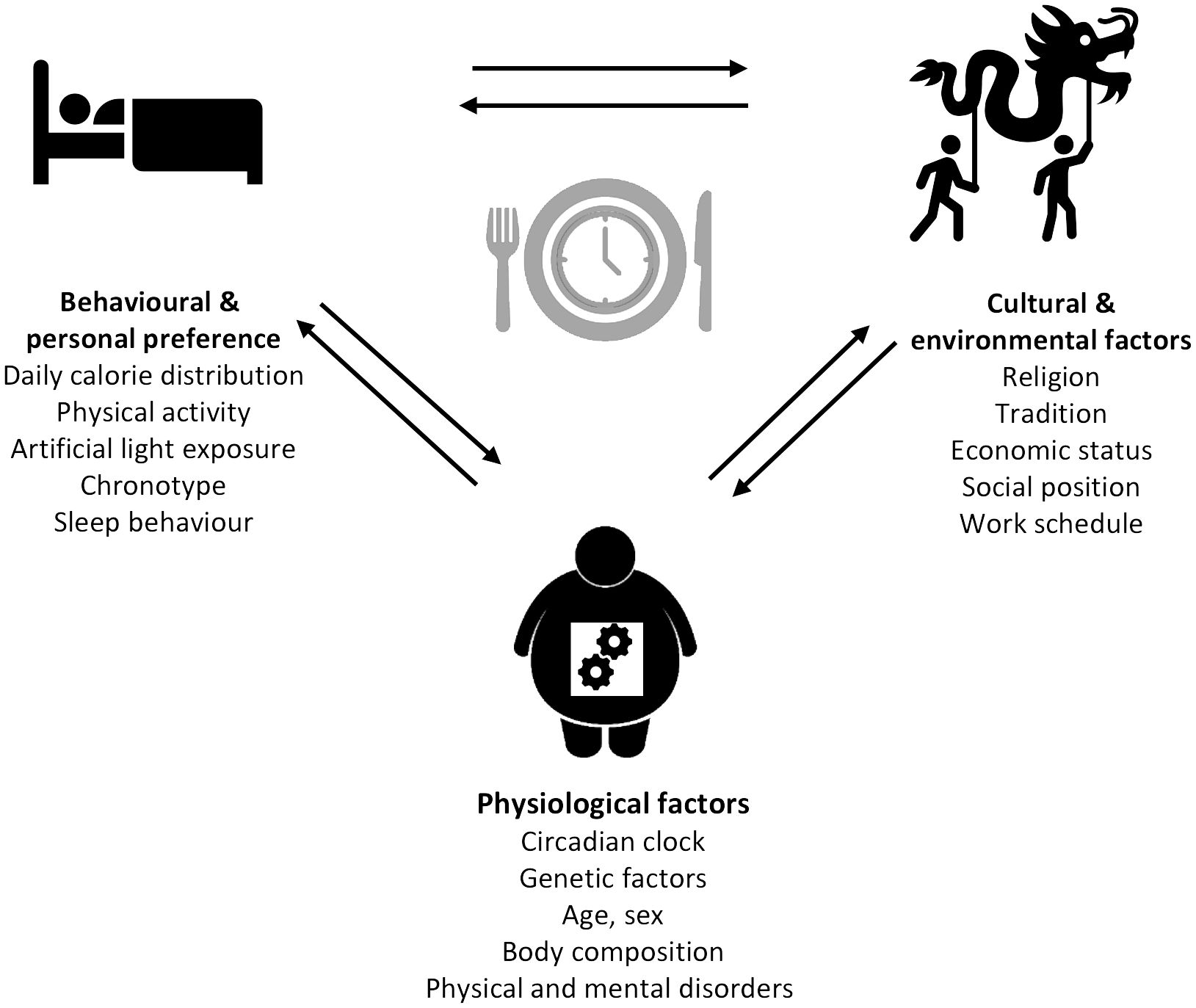
Figure 2: Meal timing is determined by diverse factors ranging from physiological elements (age, sex, genetics) to personal habits and cultural environment.
Genetic Factors
Surprisingly, breakfast timing is heavily influenced by genetics. Research shows the heritability of breakfast timing is approximately 24–56%. In contrast, dinner timing is more influenced by environment than genetics—meaning dinner habits are easier to change through willpower.
Chronotype (Morning vs. Evening Type)
An individual's circadian rhythm type, or 'chronotype,' also matters. Evening types ("night owls") tend to eat later than morning types and consume more calories after 8 PM. This carries a greater risk of obesity and blood sugar dysregulation.
Environmental and Social Factors
- Light and sleep: Staying up late under artificial lighting delays meal times. Sleep deprivation increases appetite and drives cravings for high-calorie foods, especially at night.
- Weekday vs. weekend differences: People eat regularly on weekdays due to work, then sleep in and eat late on weekends—creating 'social jetlag' that's also detrimental to metabolic health.
- Culture and religion: Mediterranean countries have a culture of late, heavy lunches, while Ramadan involves daytime fasting. These cultural backgrounds are significant determinants of meal timing.
Conclusion
Meal timing is just as important as caloric intake in preventing obesity and metabolic disease. Our meal times are influenced by a complex interplay of internal factors like innate genetics and the body clock, and external factors like work schedules and social environment.
The key point is that external factors like social environment and lifestyle habits can be changed through effort. Therefore, understanding your own circadian rhythm and adjusting meal times accordingly—a 'precision nutrition' approach—could be the key to protecting your health. Eating in sync with your body's clock may be the very foundation of a healthy life.