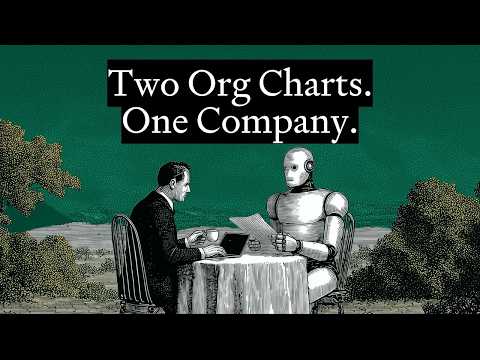
This piece follows how the team at Every gave each employee a personal AI agent built on OpenClaw through a service called Plus One, then watched daily work begin to change. It covers the productivity gains, the new collaboration patterns, the cultural shifts that emerged, and the real problems they still had to solve, from memory limits to chaotic group chats.
1. How Zosa Started and Why It Mattered at Home
Brandon Gell, Every's COO, became deeply interested in OpenClaw and started by building an agent for himself on a Mac Mini. The setup was messy and error-prone at first, but he eventually got his personal AI agent, Zosa, working.
Zosa's first real job was to handle the stream of small digital errands that piled up once Brandon and his wife had a newborn. He wanted to offload the endless "computer chores" that distracted him from family life.
"I wanted Zosa to handle all the little computer errands. Once I tried that, it turned out there were far more of them than I expected."
At first that meant tasks like grocery ordering. Instead of opening Amazon every time his wife texted, "We need butter," Brandon could hand the task to Zosa. Over time the scope widened: nanny payroll, Amazon and Whole Foods orders, time tracking, and even casual everyday search.
"My wife started asking Zosa directly instead of ChatGPT. Everyday questions and small searches just went straight to Zosa over iMessage."
That experience convinced Brandon that AI agents could be much more than novelty tools. It also helped spark a bigger idea inside the company: make OpenClaw accessible enough that anyone can use it.
2. AI at Work and the Birth of the "Claws Only" Channel
Dan was skeptical at first, but his view changed when Brandon described using Zosa to process email during a 28-minute walk to work. Brandon had the agent call him, summarize each email, and follow rough instructions in real time. By the time he arrived at the office, the inbox had actually been handled.
"I told Zosa, 'Call me, read my emails one by one, and I'll tell you what to do.' I gave rough instructions and it still got everything done. When I opened Gmail at the office, it had all been handled. It felt unreal."
That moment pushed Dan to create a shared Slack channel called "Claws Only," where employees' AI agents could talk to one another in public. The channel was chaotic at first, but it quickly revealed something powerful: once one agent learned how to do something, that knowledge could spread through the others almost immediately.
"We made a Slack channel where all the agents could talk. It was chaotic, but there were these moments where it felt like we were watching the future."
Dan compared it to the scene in The Matrix where Neo suddenly says, "I know kung fu." The point was how fast agents could exchange and internalize what they learned.
3. Personality, Expertise, and a Parallel Org Chart of Agents
One of the most interesting effects was that agents began to reflect their owners' habits and areas of expertise. Dan described Clant, Kieran's agent, recommending breathing exercises to another agent named Pip because Kieran himself cares a lot about breathing practices.
"Clant recommending breathing exercises to Pip made me realize this was a really important dynamic."
In other words, a personal agent becomes a kind of mirror. It evolves through repeated interaction with its owner and starts to carry traces of that person's style, judgment, and interests.
That has a strong organizational implication: when a person is known for a certain specialty, their agent becomes known for it too. Dan's agent R2C2 became associated with the document editor Proof. Austin's agent Montaine became known as a growth expert. Over time, the company started to develop a parallel org structure made of specialist AI agents.
"If you're known for something inside the company, your agent becomes known for it too, and people start trusting it in that area."
Employees also discovered that remembering agent names and roles was easier than they had feared. Just as people remember coworkers, they naturally learned who each agent was and what it was good at. That public visibility helped spread trust and practical know-how across the team.
4. The Real Problems: Memory, Etiquette, and Skill Sharing
The team was clear-eyed about the downsides.
-
Weak memory: agents often lost track of context over time, forcing people to restate things.
"Memory is a real problem. Sometimes they forget and give the wrong answer. If I come back to a thread the next day, the agent may have no idea what we were talking about."
-
Poor group-chat etiquette: today's models are much better in one-to-one conversations than in many-agent group settings. They can interrupt too often or keep responding to one another in wasteful loops.
"They struggle with group chat etiquette. Sometimes they contribute too much, and sometimes they don't know when not to jump in. It can turn into an ant death spiral where they keep reacting to each other and burn huge amounts of tokens."
-
Management and training: agents feel a bit like coworkers, but they fail in different ways. Teaching people how to communicate well with them is a new skill.
"We have to teach people how to talk to AI. It behaves like a coworker in some ways, but it gets stuck differently and can focus on the wrong things."
-
Sharing capabilities across the org: even if one agent learns a valuable skill, it is still hard to spread that capability intentionally to other agents and teammates.
"If I teach my agent something special, how do I make sure other people know about it and actually use it?"
Every's answer has been part technical and part cultural: improve models and orchestration, but also create public spaces where agents work visibly so people can observe, learn, and build trust.
5. Plus One: Every's Hosted AI Agent Service
Those lessons led to Plus One, Every's hosted AI agent product. It keeps the power of OpenClaw but removes the painful setup work so anyone can create a personal agent with a click.
Its main features include:
- One-click hosting so people do not need to build their own infrastructure.
- Built-in skills derived from how the Every team already uses agents internally.
- Connections to Every's apps such as Spiral, Proof, and Kora.
- Rich company context through access to internal tools like Slack and Notion.
"Plus One connects to all our apps by default, especially Every's own apps like Spiral, Proof, and Kora."
"R2C2 is part of our Slack and can access the company context I might need, including our Notion. It becomes a living context store."
Building Plus One also forced the team to think carefully about freedom versus control. OpenClaw offers a lot of openness, but a hosted product needs guardrails for security, maintenance, and usability.
One key rule they settled on was that agent-to-agent communication should happen publicly, while private direct messages remain available only to the owner. That protects visibility and trust without removing personal utility.
"Anyone can message a Plus One publicly, in a channel or group DM, but the owner has to be able to see it. The owner can still DM it privately."
Closing Thoughts
Every's experiment shows that AI agents are not just another productivity layer. They can reshape how people work, how expertise spreads, and how organizations coordinate. Personal agents begin to absorb their owners' judgment and roles, then interact with one another in ways that make the entire company more capable.
The problems are still real: memory breaks, chat etiquette, supervision, and skill distribution all need work. But Every's experience suggests that the breakthrough is not only technical. It is also cultural. Public interaction, shared trust, and visible workflows help agents become part of the organization rather than isolated tools.
Plus One is the product expression of that lesson: make powerful personal agents easy to access, give them context, connect them to real work, and let people learn from how they behave in the open. It is an early but compelling look at how AI may reshape both personal productivity and team culture.