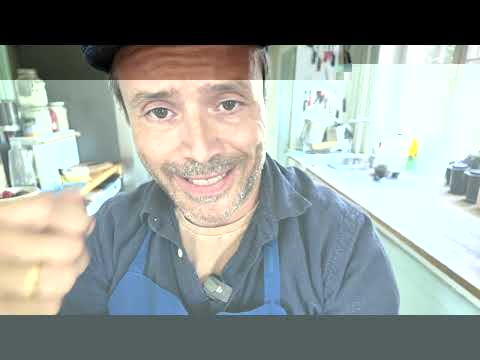
In this video, Christian Puglisi draws on his experience running his Michelin-starred restaurant Relæ profitably for 10 years to explain why the fine dining industry is becoming increasingly unsustainable. He points out that high labor and operating costs, excessive service, obsession with Michelin stars, and Instagram-centric food culture are ruining the actual cuisine and profitability of restaurants. His conclusion is clear. If you want a true gastronomic experience, you have to go to the top of fine dining or just below it, and following the traditional format of fine dining is becoming increasingly expensive and meaningless.
1. The reality of fine dining hidden behind its brilliant reputation
Christian Puglisi received a Michelin star in 2012 and says he has run his first restaurant, Relæ, profitably for 10 consecutive years. However, there is a reality that is not commonly known in the industry, and it is difficult for fine dining restaurants to actually make a lot of money.
"First of all, I want to be clear: very few people actually make money."
In his view, many of the costs of fine dining are not necessarily related to the quality of the food or the customer's experience. Gorgeous interiors, excessive manpower, complicated service, and high levels of decoration all drive up costs, but the actual profits a restaurant earns are very small.
"Most of these elements are completely unnecessary. The recognition we receive is hardly worth the effort."
He also says that fame like a Michelin star can keep chefs away from actual cooking. Restaurants, which were originally supposed to be about food and customers, at some point begin to adapt to evaluation, formality, and external recognition. As a result, fine dining is increasingly becoming a superficial and formal industry.
2. Structure that makes it difficult to make a profit and investors' illusions
The biggest reason why fine dining restaurants find it difficult to make a profit is margins are too thin. In addition to food ingredients, labor costs, rent, equipment, electricity and heating costs, service operation costs, etc. continue to pile up.
"The margins are really thin. You could even say they are knife-thin."
He explains that the only way for a high-end restaurant to make money is to secure other sources of revenue other than restaurant operations. For example, running a large banquet hall or running a catering business using the name of a restaurant.
"The best way for a very upscale restaurant to make money is to have other revenue streams: either a large banquet hall or a catering business attached to the name."
Of course, some top restaurants make significant profits. But that is only a small part.
"The really top restaurants make big profits, but that's 1% of the 1%."
Rather, he says, the most dangerous form is a restaurant that has not yet received a Michelin star but desperately wants one. In places like this, a chef's pride and an investor's fantasy combine. Investors are fascinated by the idea of 'owning a great fine dining restaurant', and chefs spend more and more money to get a Michelin star.
"The worst performing restaurants are those that don't have Michelin stars but really want one."
"The combination of an investor's desire for recognition and the fantasy of owning a fine dining restaurant results in too much money being invested in something that will never turn a profit."
3. Why Relæ was able to make a profit
Puglisi says his restaurant Relæ has actually been very profitable. However, the reason is that the goal was not to have a Michelin star from the beginning.
Relæ was first created as a unique business and restaurant, and as a result received a Michelin star. The restaurant was not designed according to what the Michelin Guide wanted.
"The reason Relæ was profitable is because it was not a restaurant built to receive a Michelin star in the first place."
"We first built a profitable business, which later earned us a Michelin star."
When he opened Relæ in 2010, most of Copenhagen's Michelin-starred restaurants were struggling. At the time, many restaurants had stars, but few actually made money. Relæ was an exceptional restaurant that broke away from the norm.
"Relæ was the 1% that was different from the norm, that was different from the norm."
From the beginning, he tried to remove the conventional elements of fine dining, leaving only creativity and a sincere interest in cooking. Instead of adding unnecessary decorations to create a formal atmosphere, they focused on the food itself and the customer experience.
4. Is it a service for customers or 'living decoration'?
Puglisi also strongly criticizes the service methods of traditional fine dining. Service such as removing a chair for a customer when he or she goes to the bathroom, guiding the customer to the restroom, and checking again when the customer returns is viewed as excessive interference rather than kindness.
"This is a service that removes the chair for you when you go to the bathroom, follows you after going to the bathroom four times, and stays by your side the entire time."
He says good hospitality isn't just about having lots of staff around guests. Rather, having people constantly standing around the table unnecessarily can hinder the guest experience.
"Great service and hospitality are not created by having too many people."
Puglisi calls this excessive staffing 'living decor'. This means that although there are many staff around the table, they do not provide any real help to the guests.
"This is what I call 'living decoration.' There are a lot of people around the table for no reason."
Another example of unnecessary service is to keep pouring water even though you haven't even finished drinking it.
"If you pour water when there is this much water left in the glass, there are too many employees here."
"I don't want someone pouring water for me at my table. It's not useful, it's intrusive and distracts from my experience. Please stop."
He says the same goes for services like crumbing, which removes crumbs from tables.
"I can clean up the crumbs from the table. Please don't make me pay more for that service."
His argument is that these factors are not the hospitality that customers want, but rather the costs that the restaurant maintains to look luxurious.
5. Chasing Michelin stars is risky for business
Puglisi says that while a Michelin star may seem like the restaurant industry's greatest achievement, in reality the fame does not adequately reward the effort.
To receive a Michelin star, chefs and restaurants must endure enormous amounts of work. However, the final success depends on external evaluators and guides that the restaurant cannot control.
"You have to work too much, too hard, and be completely at the mercy of the judgment of other people and some guides."
In the past, the Michelin Guide was an important way to inform customers about restaurants. But now, through social media and the Internet, there are many more ways for people to discover restaurants. Nevertheless, the Michelin Guide still exercises the authority to judge which restaurants are high-end.
"Michelin stars used to be important to reach people. Now, that's not the case, but they still determine which restaurants qualify as fine dining."
Therefore, it is a very unstable strategy for businessmen and chefs to aim for the stars.
"Chasing after the stars is putting yourself in an impossible position, both as a business and as a chef."
They also point out that the scarcity of Michelin stars themselves is decreasing. In 2012, when Relæ received a star, there were about 14 Michelin stars in Denmark as a whole, but as of 2026, the number has increased to more than 50 to 60, as mentioned in the subtitle.
"As the Michelin Guide lowers the value of its stars, the reward for the effort put into it is also decreasing."
He explains that because the Michelin Guide is also a business, it has no choice but to expand its business and award stars to more restaurants. The fact that one star in the past has become closer to two stars now means that the symbolism of the star has been diluted that much.
6. How Instagram changed cooking
Puglisi says that since 2010, Instagram has changed the cooking and restaurant industry in a negative way. This is because customers visiting high-end restaurants have begun to expect visual scenes that can be captured in photos rather than the taste and depth of food.
"Since 2010, Instagram has changed the culinary and restaurant industry for the worse."
Customers care not only about how delicious the food is, but also whether they can take pictures of it and show it to others.
"I look forward to scenes that I can show my friends and say, 'Look at what we ate. Isn't that really interesting?'"
In this process, the language used to talk about food and gastronomy also changed. Originally, taste, depth, interest, the story of the food, and the production process and source of ingredients were important. But now it is becoming more important how colorful and complex the food looks and how photogenic it is.
"The language of cooking and gastronomy is changing from one centered on taste and depth, stories and the provenance of ingredients, to one centered on visible and shareable photos."
This phenomenon creates a repetitive feedback structure. As customers want photos, restaurants create more complex and strangely shaped food, which in turn is accepted by customers as the "standard of high-end cuisine." As a result, food increasingly relies on superficial visual effects.
"As you move up the ranks of fine dining, there is less actual cooking and more and more superficial aspects of cooking."
He says this change is unfortunate. This is because the true charm of food lies not in its appearance, which can be conveyed at a glance through a photo, but in its taste, aroma, texture, background of ingredients, and the chef's thoughts.
7. Overly manipulated food and 'euthanized cuisine'
Puglisi criticizes fine dining food for becoming overly complex and labor-intensive. There are many cases where having the food look elaborate and fancy on the plate is given priority over cooking it deliciously.
He ridicules the scene where tweezers are used for cooking and says that tweezers are not intended to be used for food, but should only be used to pick out hair.
"Use these tools only for picking out hair. Not for cooking. Please."
What he particularly takes issue with is the process of multiple chefs arranging ingredients one by one over a long period of time to complete one dish. It is said that the longer the process, the more the food loses its liveliness and the strength and naturalness it had when first cooked.
"I see the chef, along with three or four colleagues, putting something on the plate for minutes and minutes."
"I see the dish getting smaller and smaller and losing its vitality."
Puglisi describes such food as 'food that has been euthanized' before it even reaches the table. This means that complex cooking and decoration do not save the life of food, but rather kill the essence of food.
"It almost looks like the food was euthanized before it even reached the table."
"There is no life, no power, no message in that food. It is dead."
In the end, he strongly criticizes that what food does not do is provide guests with a deep experience, but only makes the hands of the person holding the plate look nice.
"It serves no purpose other than to make the hand of the person holding the plate look nice."
He says overly manipulated food can be completely disconnected from nature, expression and the chef's vision. The depth and message of the dish takes a backseat as guests want an intricate look that's easy to post on social media.
"Complexly manipulated food ends up completely losing its nature, expression, and vision."
"Customers are demanding food that looks elaborate to show off to others, rather than food with depth."
The key thing he repeatedly emphasizes is depth. The argument is that food should not simply look complicated, but should have taste, story, vitality, and intention.
8. Endlessly rising prices and meaningless premiums
The final subject of criticism in the video is the price of fine dining. Fixed costs such as electricity, heating, rent, and labor costs have risen significantly, and securing employees has become increasingly difficult. Food ingredient prices also continue to rise due to the influence of other operating costs.
"Fixed costs, electricity, heating, rent, and labor costs have risen explosively."
If costs rise like this, restaurants have no choice but to raise prices. However, if the price is too high, customers end up paying a lot of money for unnecessary services and formalities rather than the food itself.
"Eventually, prices get so high that you end up paying more for something that is already too expensive."
Puglisi says he doesn't want to pay for someone to remove the chair when he doesn't even care about it. The same goes for services that include guidance to the bathroom or cleaning up crumbs from the table.
"I have no interest in the chair, and I don't want to pay today's high prices for someone to take it away from me."
"I don't want to pay to be shown to the bathroom or to clean up crumbs from the table."
He says he had been conscious of this problem since 2009, before opening Relæ. So when I started Relæ in 2010, I wanted to create a restaurant that was the exact opposite of typical fine dining.
9. Success found on the other side of fine dining
Relæ was designed as an 'anti-fine dining restaurant' that does not follow the typical rules of fine dining. We reduced unnecessary services and excessive manpower, and focused on food and what customers directly need.
As a result, Relæ was able to accommodate more than 70 guests and still run the service with only two hall staff.
"We served over 70 people and ran the service with just two hall staff."
Puglisi says this is a structure that is difficult to imagine in a typical fine dining restaurant. But it is precisely this efficiency that allows Relæ to remain highly profitable while being a Michelin-starred restaurant.
"We created a very profitable fine dining restaurant by not creating a fine dining restaurant."
He clearly adds that he is not disapproving of all high-end restaurants. In fact, there are many great restaurants, and top-notch experiences are sometimes worth paying high prices. What he objects to is the way most restaurants superficially accept the concept of fine dining and then repeat it meaninglessly.
"What I am against is the concept of fine dining restaurants. Most people take that concept at face value and repeat it ad nauseam."
The result is that restaurants become boring, out of touch, and overly expensive.
"You end up creating something that is very boring, pointless, and too expensive."
Conclusion: Real gastronomy lies beyond the format of fine dining
The alternative that Puglisi suggests is to find the most expensive top-tier fine dining restaurant or a restaurant just below that level. Top restaurants can be of special value if you can afford the high costs, but restaurants that only follow the format of traditional fine dining are likely not to provide the experience you expect.
"If you want a great gastronomic experience, you don't go to fine dining. You have to go just below that."
The energy, spontaneity, intensity and joy of cooking are still alive in what he calls the 'level below fine dining.'
"The energy is still alive down there, and the cooking is immediate, intense and fun."
In the end, the point of this video is expensive food is not necessarily in-depth food. Michelin stars, intricate decorations, numerous staff, over-the-top service and Instagram-worthy looks cannot replace the essence of the food. The message is that the value of a true restaurant lies not in how many formalities it presents to guests, but in how vivid and delicious the food is and how authentic the story is told.