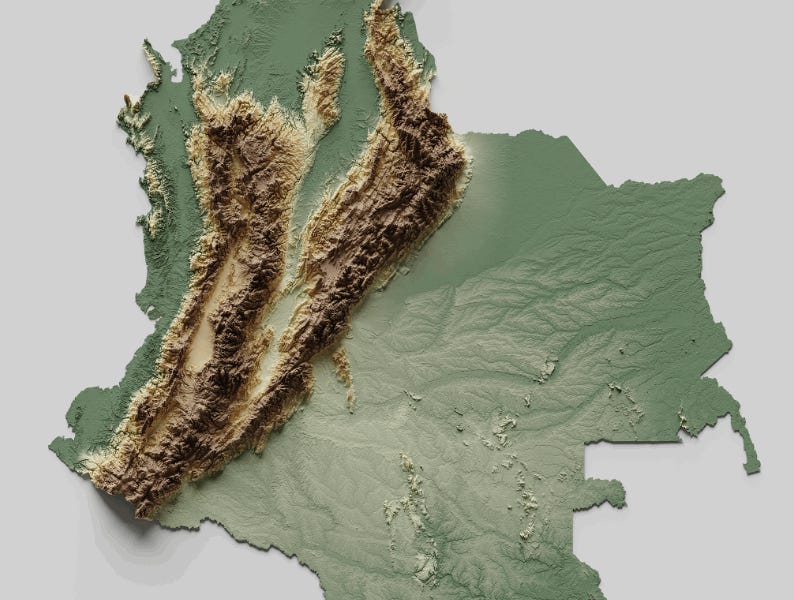
Countries closer to the equator tend to be hotter, and it has long been observed that they are also poorer. This piece offers a fresh perspective on how climate, economic development, and especially mountainous terrain are deeply intertwined. It goes beyond the simple variable of temperature to give a more nuanced answer to the question "Why are hot countries still poor?" — and offers hints toward practical solutions.
1. The Correlation Between the Equator and Wealth
Countries located near the equator tend to have lower average GDP per capita. The following chart shows a clear correlation between latitude and GDP.
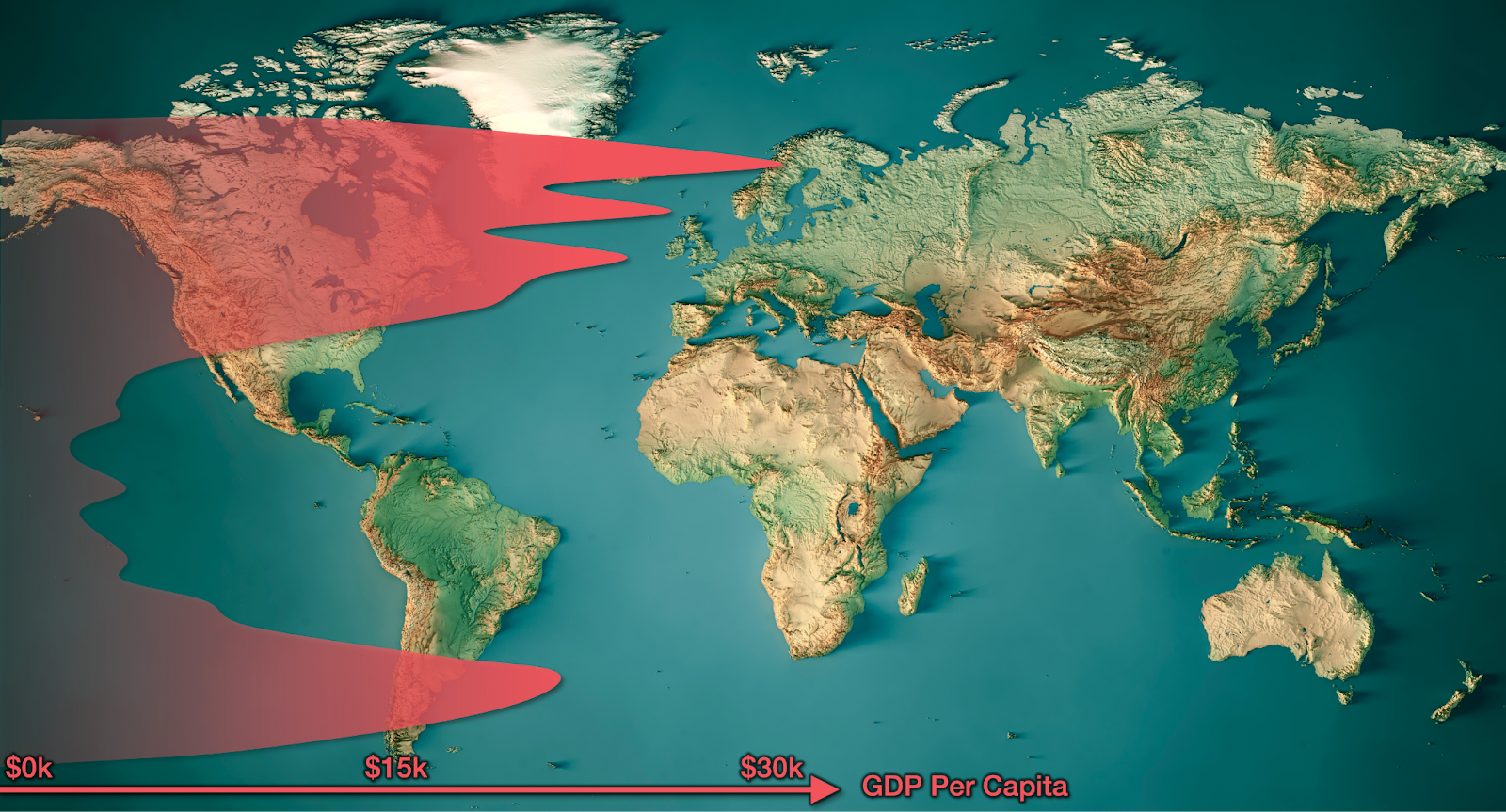
Notably, the wealthy nations near the equator are almost exclusively small or otherwise exceptional states — Singapore, Hong Kong, the UAE, and a handful of others.
"The wealthy countries near the equator are clear outliers. Nearly all of them are microstates. Singapore and Hong Kong have massive air conditioning infrastructure; Equatorial Guinea has oil; Seychelles, Barbados, the UAE, Puerto Rico — all small countries."
The conventional explanations for economic disparities have long recycled the same stereotypical lines:
"People who live in a cold climate are full of vigor." — Aristotle (350 BC)
"Excessive heat makes the body languid, so people are lazy and lack motivation." — Montesquieu, The Spirit of the Laws (1750)
Modern research, however, demonstrates that people in hot countries are not "lazy" — they simply have lower productivity.
2. Temperature, Productivity, and Health
The evidence is clear: higher temperatures have a measurable negative impact on productivity and economic growth.
- A 1°C rise in average temperature is associated with roughly an 8.5% decline in GDP per capita.
- In low-income countries, a 1°C increase reduces economic growth by 1.3 percentage points.
- Above 27°C, a 1°C increase reduces labor productivity by as much as 4%.
- Heat waves negatively affect test scores, the linguistic complexity of politicians' speech, crime rates, sleep quality, and more.
"I used to find myself and my friends in a kind of dazed stupor in Bali without quite realizing it. In cafés or restaurants without AC, you just sit there zoning out. Then you'd occasionally step into a café with air conditioning, and after about thirty minutes you'd think: 'Oh, I'm back.'" — @levelsio
The piece also emphasizes that air conditioning (AC) played a decisive role in the economic development of the American South, and that it was equally central to Singapore's rise.

3. Heat, Humidity, Disease, and Poverty
Beyond temperature, humidity makes things worse. At high humidity, the body cannot cool itself through sweat, making physical activity even harder.
"When humidity hits 100%, the air can no longer absorb moisture, so sweating no longer cools you down. At that point, stopping all movement is the only way to avoid overheating."
Disease is another major factor. Malaria, dengue fever, and various parasites thrive in hot, humid environments. High rates of illness and early death directly reduce productivity.
"When disease is rampant, parents focus on having more children rather than investing deeply in each individual child's education and development. This dynamic reduces per-person productivity."
As a result, hot countries are caught in a vicious cycle: lower productivity, worse health outcomes, and persistent national poverty.
4. The Limits of "Bad Institutions" and the Resource Curse
Another attempt to explain why hot countries are poor points to colonial legacies leaving behind bad institutions, or argues that resource-rich countries suffer a "resource curse" that crowds out other industries.
But these theories have clear limits:
- The United States, Australia, and New Zealand were all colonized, yet are wealthy.
- Ethiopia and Thailand were never colonized, yet are not wealthy either.
- Natural environments and soils near the equator are often actually unfavorable for agriculture.
- Highland areas with significant Western settlement (e.g., Mexico, Colombia) remained poor for a long time.
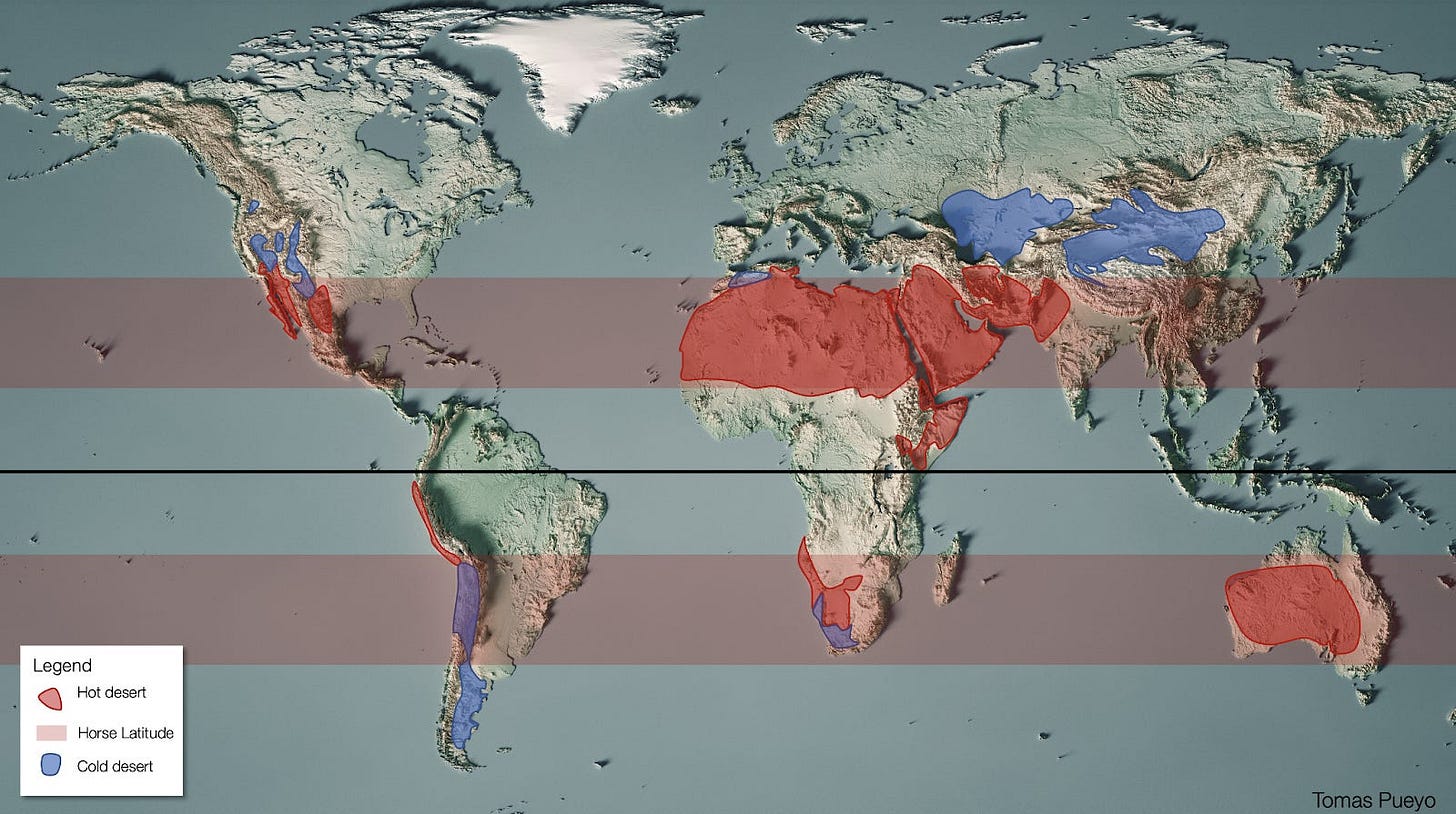
"Even if all these explanations hold some truth, the causal chain ultimately runs: bad climate → disease → Western settlers avoid it → bad institutions. The root cause is still geographic."
5. The Real Cause: Mountainous Terrain and Life at Altitude
Now comes the core theory the author calls "revolutionary." Many people picture "Africa = scorching plains," but in reality people cluster in highland areas.
- Capital cities of many lower-income countries — Nairobi in Kenya, Mexico City, Bogotá, Addis Ababa in Ethiopia — sit at over 1,000 meters above sea level, with average annual temperatures comparable to or cooler than major cities in Southern Europe.
- In Latin America and Africa, population is concentrated in highlands and plateaus rather than lowland plains.
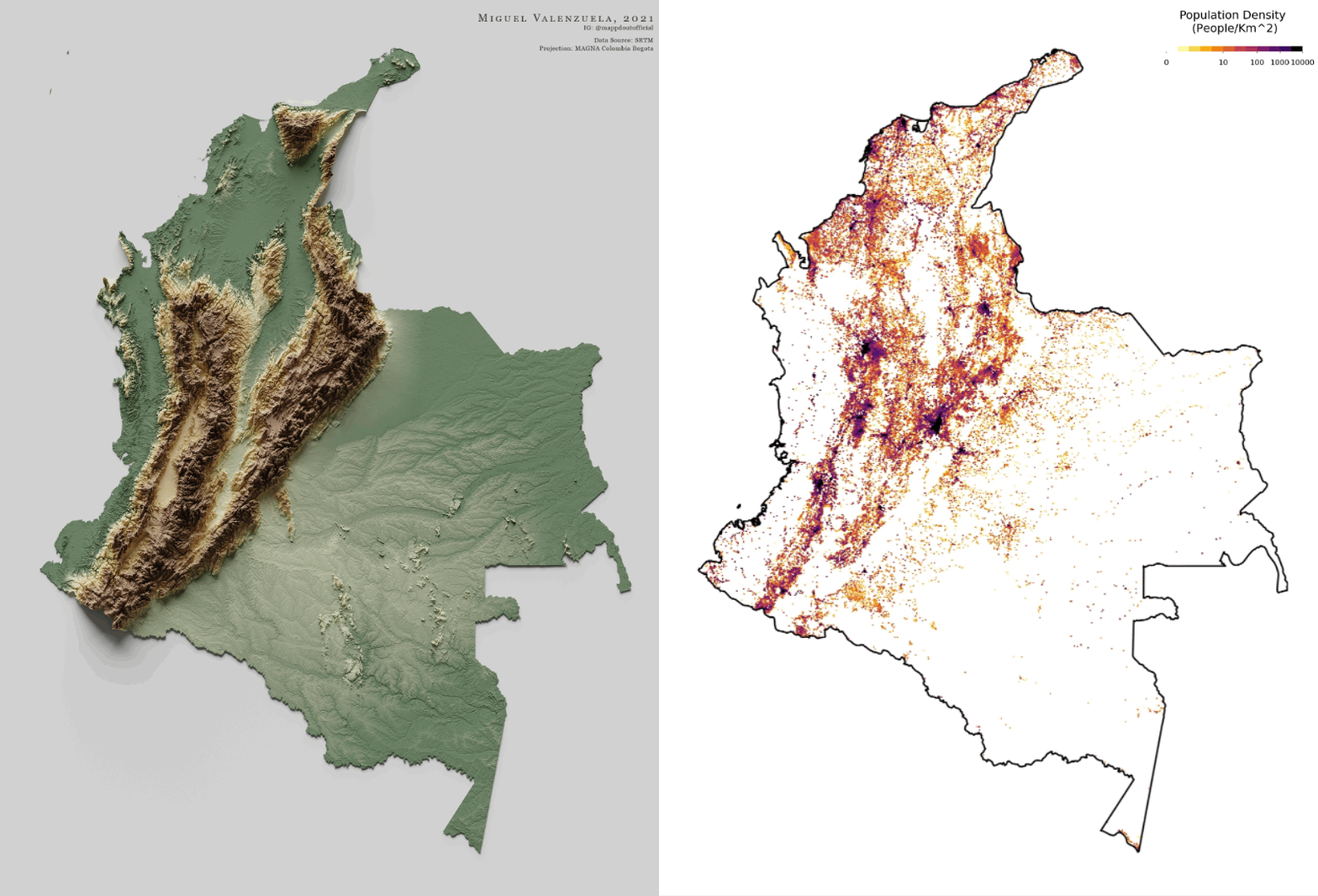
The reason is that higher elevations bring lower temperatures and humidity, making it possible to avoid disease and cool the body through sweat. This naturally drew people toward the highlands.
6. The Core Dilemma Mountains Create: "Sick Lowlands" vs. "Isolated Highland Poverty"
Yet the highlands carry enormous disadvantages of their own.
-
Mountainous terrain makes transportation, trade, and infrastructure expansion extremely difficult.
- Mountain ranges, valleys, and rivers drive logistics costs sky-high, and building and maintaining roads, railways, and communications networks is enormously expensive.
- This makes broad trade networks — linking inland regions to coastal cities — impossible, slowing the accumulation of wealth.
-
Lack of integration between sub-regions, ethnic diversity, fragmentation, and conflict
- Communities isolated in valleys develop their own customs, languages, and traditions, breeding mutual suspicion and a sense of difference.
- This leads to ethnic conflict, political instability, and fragmentation.
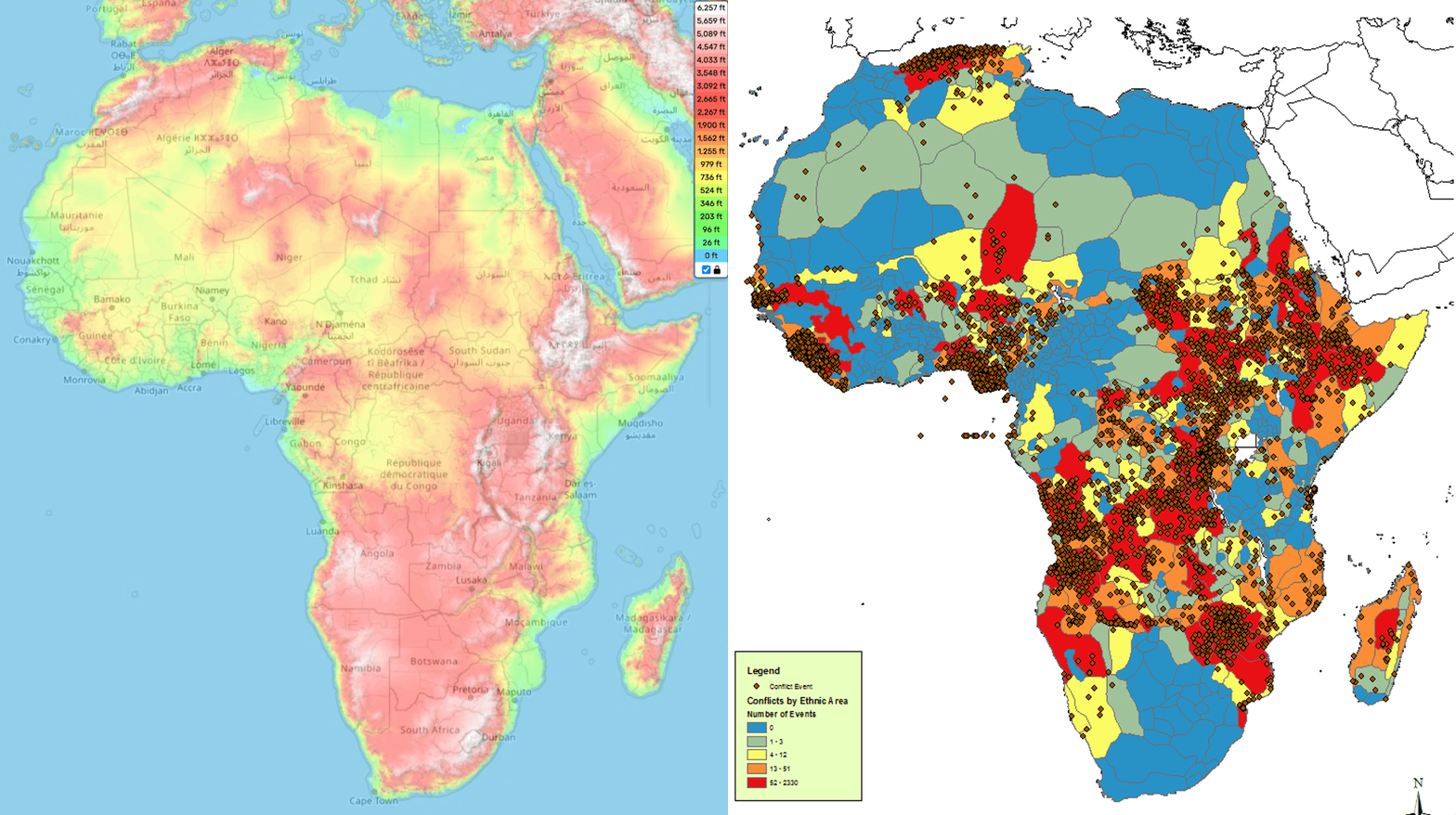
"The brown dots are conflict events. Most ethnic conflicts in Africa occur in the mountains. The pattern is unmistakable."
The author argues that mountainous terrain is the most important and overlooked variable in explaining economic development.
7. Summary: Warm Countries, Low Lands, High Mountains, and Solutions
In conclusion, people in hot countries have been forced to choose between low productivity and high disease on the sick plains, or isolation, poverty, and conflict in the mountains.
- The root cause is not "climate" but "terrain and its consequences"
- In the lowlands, the path forward lies in air conditioning, healthcare, and mosquito control to raise productivity and improve health
- In the highlands, revolutionary improvements in transportation infrastructure are what will enable long-term development
"Instead of getting bogged down in pointless arguments about who is to blame for poverty, we need to focus on the root causes we can actually change — and the solutions that follow from them."
Closing
Synthesizing the long debate over why hot countries are poor, it becomes clear that mountains and terrain play a decisive role. Living at altitude lowers the risk of disease, but economically it strips away opportunities for trade, integration, and wealth accumulation, while fueling various forms of fragmentation. The lesson here is to think carefully about terrain, climate, and institutional interventions together — and to focus on what can actually be done. 🏔️🌎✨