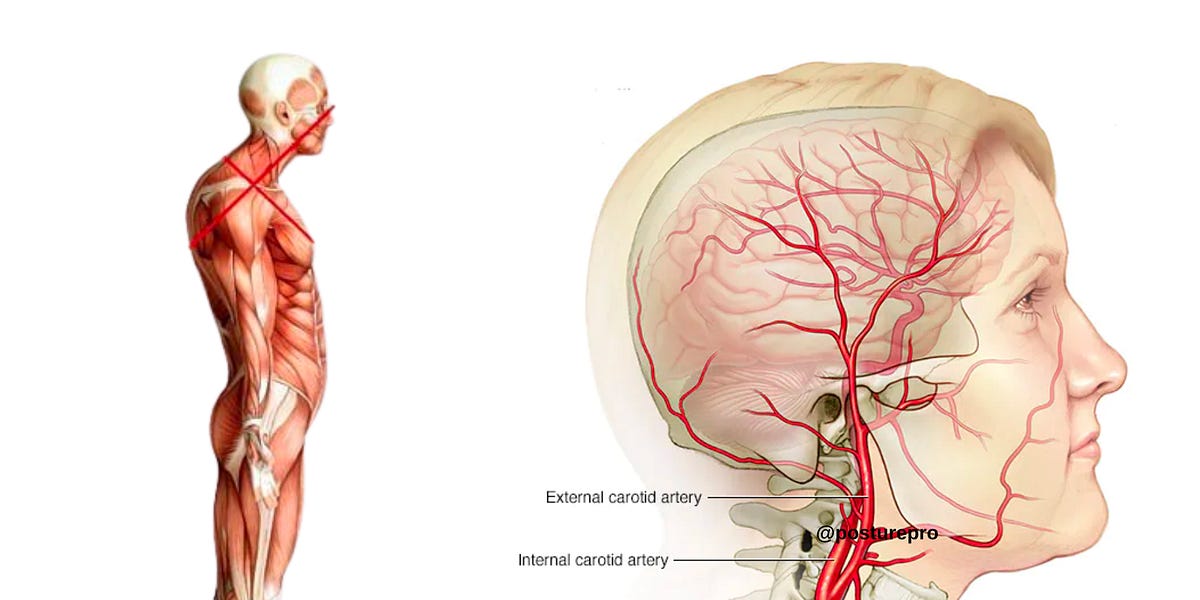
Forward head posture goes beyond a simple postural issue -- it seriously affects cerebral blood flow, cognitive function, and mental health. Based on scientific research and clinical cases, this article explains how head position reduces blood flow to the brain and threatens overall health. With root causes and solutions clearly organized, this is essential information for anyone concerned about their health.
1. Head Position and Cerebral Blood Flow: The Truth About Physical Compression
First, the article recommends finding your pulse (carotid artery) on your neck and directly experiencing whether the pulse weakens when you push your head forward.
"Try the posture of leaning your head toward the monitor. Can you feel how the pulse changes?"
According to a 2019 study in the Cranio journal, forward head posture can reduce blood flow in the carotid artery (the main vessel supplying oxygen to the brain) by up to 20%. Researchers measured 87 people using Doppler ultrasound and found that those whose heads protruded more than 5cm ahead of their shoulders showed "statistically significant reduction in cerebral perfusion."
Compression occurs at two main locations:
- The scalene muscles of the neck
- The first cervical vertebra (atlas)
At these two points, blood vessels are compressed "like a garden hose being kinked," blocking blood flow to the brain. The brain requires about 750ml of blood per minute -- a 20% reduction means only 600ml is supplied, and this is the difference between "clear thinking and chronic brain fatigue (brain fog)."
2. Mechanical Tension on the Nervous System: Dr. Breig's Cases
Swedish neurosurgeon Dr. Alf Breig demonstrated the shocking effects of head position on the nervous system through cadaver dissection studies.
"When the neck of a cadaver is flexed forward, the spinal cord stretches by 5-7 cm."
For a spinal cord only about 45cm long, a 7cm stretch represents enormous tension. This tension is concentrated especially at the brainstem (medulla oblongata), which controls all unconscious life-sustaining functions including "breathing, heart rate, and blood pressure."
"Measurable pressure is definitively applied to brainstem nuclei (critical brain cells)."
The meninges that envelop the brain and spinal cord don't stretch smoothly -- instead, they become taut like a guitar string, and this tension creates pathological tensile forces directly on brain tissue.
Modern research supports Breig's findings. The greater the spinal angle, the more harmful mechanical tension develops in neck muscles, nerves, and blood vessels. In fact, patients who underwent surgery to correct neck position showed a 23% improvement in cognitive function post-surgery.
3. How Forward Head Posture Symptoms Develop and the Daily Vicious Cycle
A 2000 study from the Mayo Clinic clearly describes the progression stages of forward head posture:
Stage 1 (0-6 months): Muscle spasms, tension headaches Stage 2 (6-24 months): Disc dehydration, early disc herniation Stage 3 (2-5 years): Arthritis, nerve compression Stage 4 (5+ years): Permanent neurological changes
Importantly,
"Cognitive symptoms (brain fog, anxiety, sleep problems) appear 12-18 months before structural changes (abnormalities visible on imaging)."
In other words, before problems are visible on MRI, the brain is already oxygen-deprived, producing cognitive and emotional symptoms.
A 2021 Clinical Biomechanics study tracked cerebral blood flow in 62 forward head posture patients using fMRI:
- 31% reduction in vertebral artery blood flow
- 20% reduction in carotid artery blood flow
- 45% increase in temporal artery blood flow (compensatory mechanism)
That is, the brain compensates for survival by rerouting through smaller vessels (temporal arteries), which is why people with forward head posture easily develop temple headaches.
4. Root Causes of Forward Head Posture: Two System Failures
The author defines forward head posture not as a "postural problem" but as a "stability crisis of two nervous systems."
4.1. Foot Sensation (Plantar Proprioceptive Network)
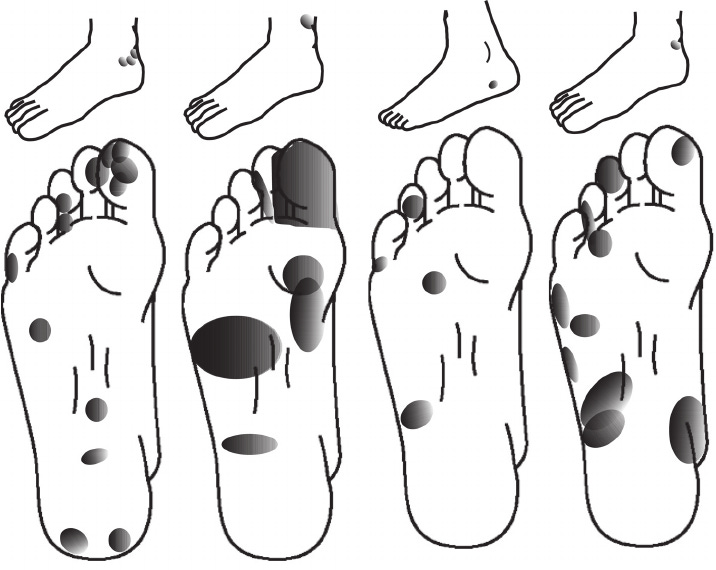
The feet have 200,000 sensory receptors that relay "where I am right now" to the brain in real time. However, modern shoes with cushioning and arch support block 70% of this sensation.
A 2018 Gait & Posture study found that the group wearing minimal shoes had 2.3 times better postural stability and head position improved by an average of 1.7 inches (4.3cm) compared to the group wearing conventional shoes.
When foot sensation is dulled, the brain perceives "the foundation is unstable" and pushes the head forward for stability.
4.2. Tongue Posture and Neck Muscles (Glossopharyngeal-Cervical Reflex)
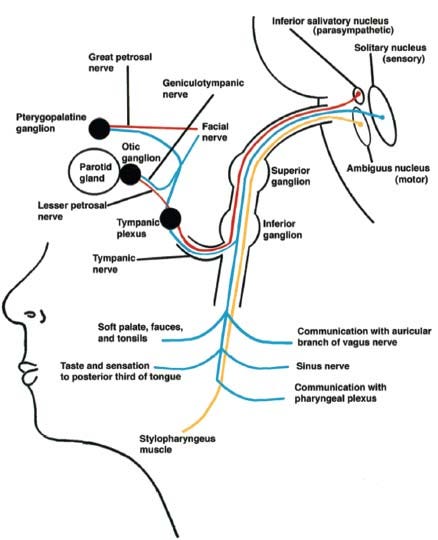
When the tongue hangs down instead of resting against the palate, deep neck flexor activation is significantly reduced.
"Simply correcting tongue posture increases deep neck flexor activation by 38%." (2019 study)
Tongue drops down -> neck muscles weaken -> head moves forward -> blood vessel compression -> brain fatigue, brain fog, anxiety Most people have their tongue in the wrong position for 23 hours a day.
5. The Cybernetic Loop: A Vicious Cycle of Whole-Body Connections
The author introduces a feedback loop (cybernetic loop): "tongue posture -> jaw shift -> bilateral muscle imbalance -> neck muscle imbalance -> head position change -> inner ear (vestibular) information distortion -> weight distribution change -> arch collapse -> damage signal returning to the beginning."
- The vicious cycle starting from the tongue causes chewing muscle asymmetry (masseter, temporalis) from unconscious one-sided jaw use, ultimately "pushing the head forward."
- Vestibular confusion causes weight to shift to one foot.
- Collapsed arches and compensatory pelvic and spinal curvatures reinforce each other.
- Ultimately, blood flow and oxygen supply to the brain deteriorate, and "modern chronic symptoms" such as headaches, brain fog, anxiety, and insomnia emerge.
"If the jaw is asymmetric, the spine curves; if the spine curves, the inner ear (vestibular sense) is distorted. As a result, the feet break down, which in turn ruins tongue, jaw, and neck posture. This cycle keeps worsening."
Research-Proven Intervention Points in the Loop
- Simply correcting tongue posture improved foot pressure distribution by 34%
- Simply correcting bite alignment improved forward head posture by 2.1 inches (about 5.3cm) in just 6 weeks
In other words, normalizing just two points in the loop can reset the system.
6. Practical Solutions: Simultaneous Top-Down and Bottom-Up Intervention
-
Restoring foot sensation: Restoring plantar sensation with therapeutic insoles allows the brain to properly receive positional information, and head posture naturally corrects.
"After restoring foot sensation, head position improved by 73% within 4 weeks."
-
Tongue posture neural retraining: "Repatterning" is needed -- placing the tongue against the palate and neurologically activating the deep neck flexors. The answer is nervous system re-education, not simple exercise.
-
Self-check method:
"Check your carotid pulse when your head is extended forward versus when your ears are aligned over your shoulders. That difference is the amount of cerebral blood flow you're currently losing."
-
The PosturePro Method: A method for learning and correcting the brain-tongue-jaw-neck-foot interaction in practice.
7. A Shocking Fact: Head Position Can Deform the Brainstem
Another discovery by Dr. Breig:
"The tensile force applied to the spinal cord by forward head posture creates not only reduced blood flow but also 'physical deformation' of the brainstem itself -- the critical control tower for life support."
Specifically, the medulla (part of the brainstem) can stretch up to 4mm, and critical life-sustaining nuclei are densely packed in this region.
In 2022, a Johns Hopkins research team confirmed using 7-Tesla high-resolution MRI of living brainstems that Breig's conclusions apply identically in living subjects.
"We are watching the physical distortion of the human consciousness control center. And nobody is talking about this fact." (off-the-record researcher comment)
8. The Social Cost of Reduced Cerebral Blood Flow
According to a 2019 Spine journal article, 68% of American adults have forward head posture, meaning 224 million people chronically have reduced cerebral blood flow.
"47 billion dollars in annual medical costs are spent on misattributed causes (anxiety, depression, cognitive decline)."
A 2014 study confirmed that the average head posture during smartphone use places 60 pounds (27kg) of force on the cervical spine, and carotid blood flow decreases by 28% within just 15 minutes.
Consciously "pulling the head back" alone is absolutely insufficient -- simultaneous resetting of the two nervous systems (feet and tongue) is necessary.
9. Practical Steps & Checkpoints Summary
- Restore foot sensation (insoles, etc.) to improve positional awareness
- Nervous system re-education by placing the tongue against the palate
- Directly check your pulse to confirm positive changes
And above all,
"If you thought your symptoms were simply due to stress, aging, or genetics, they might actually be caused by your head position."
"Anxiety could be caused by hypoxia, brain fog by reduced cerebral perfusion, and insomnia by brainstem tension."
In Closing
This article presents not simple posture correction but a systemic problem and solution for the entire body. The impact of head position on the brain has been clearly demonstrated both physically and physiologically, and many symptoms can be improved through resetting the nervous system loop. Focus on your posture, pulse, and body signals, and remember that approaching the root cause first is the shortest path to health.
Referenced Studies
- Breig, A. (1978). Adverse Mechanical Tension in the Central Nervous System
- Lopez-Plaza, D., et al. (2021). "Cerebral blood flow changes in forward head posture"
- Mayo Clinic Proceedings. (2000, March)
- Hansraj, K. K. (2014). "Assessment of stresses in the cervical spine"
- Jefferson, Y. (2019). "Tongue position and deep neck flexor activation"
- Park, J. H., et al. (2020). "Immediate effects of cervical lordosis restoration"
- Chen, X., et al. (2019). "The effect of forward head posture on carotid artery blood flow"